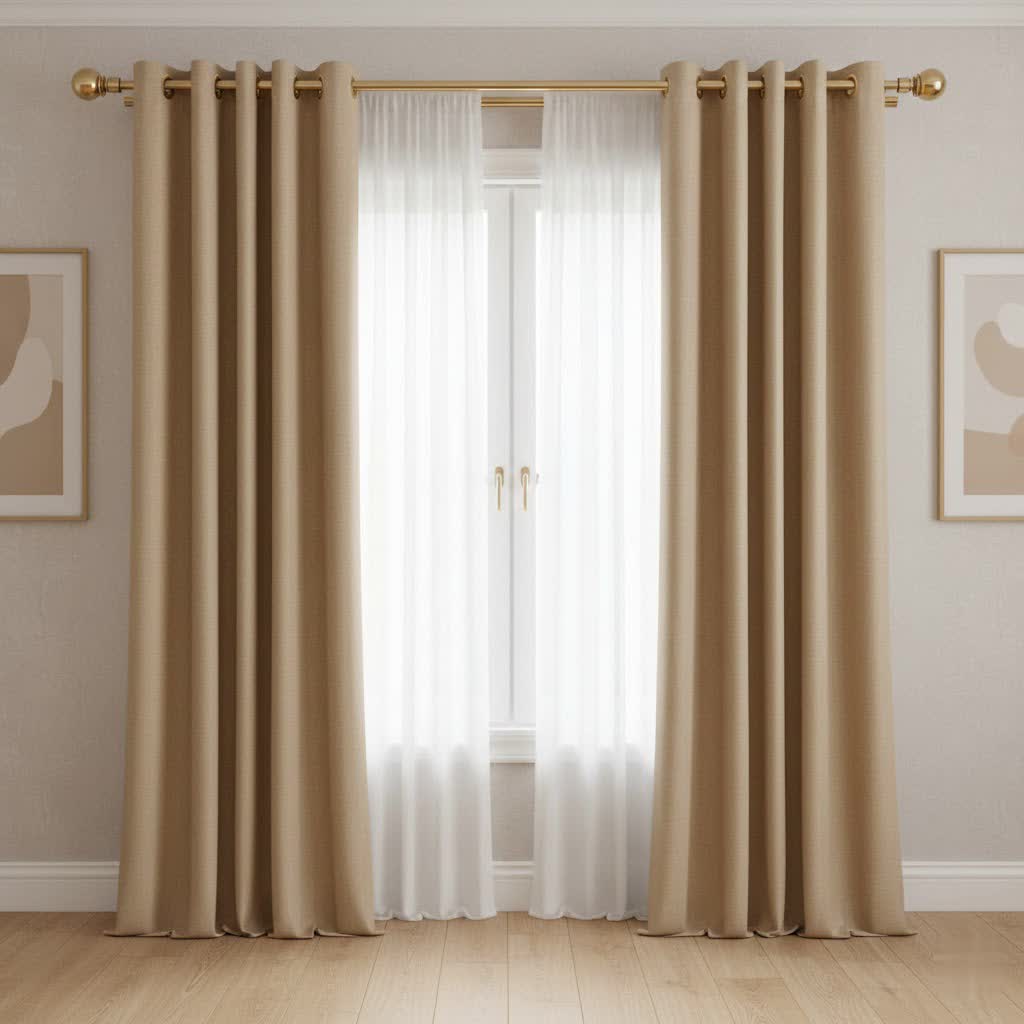
Corner windows, while architecturally appealing, require specialized curtain rods to ensure proper function and aesthetic appeal. Unlike standard straight rods, corner curtain rods are designed with hinged joints, curves, or connectors that allow them to navigate angles gracefully, creating a continuous and polished appearance for your window treatments. The right rod system enhances privacy, light control, and integrates seamlessly with your interior design, transforming unique windows into stunning focal points.
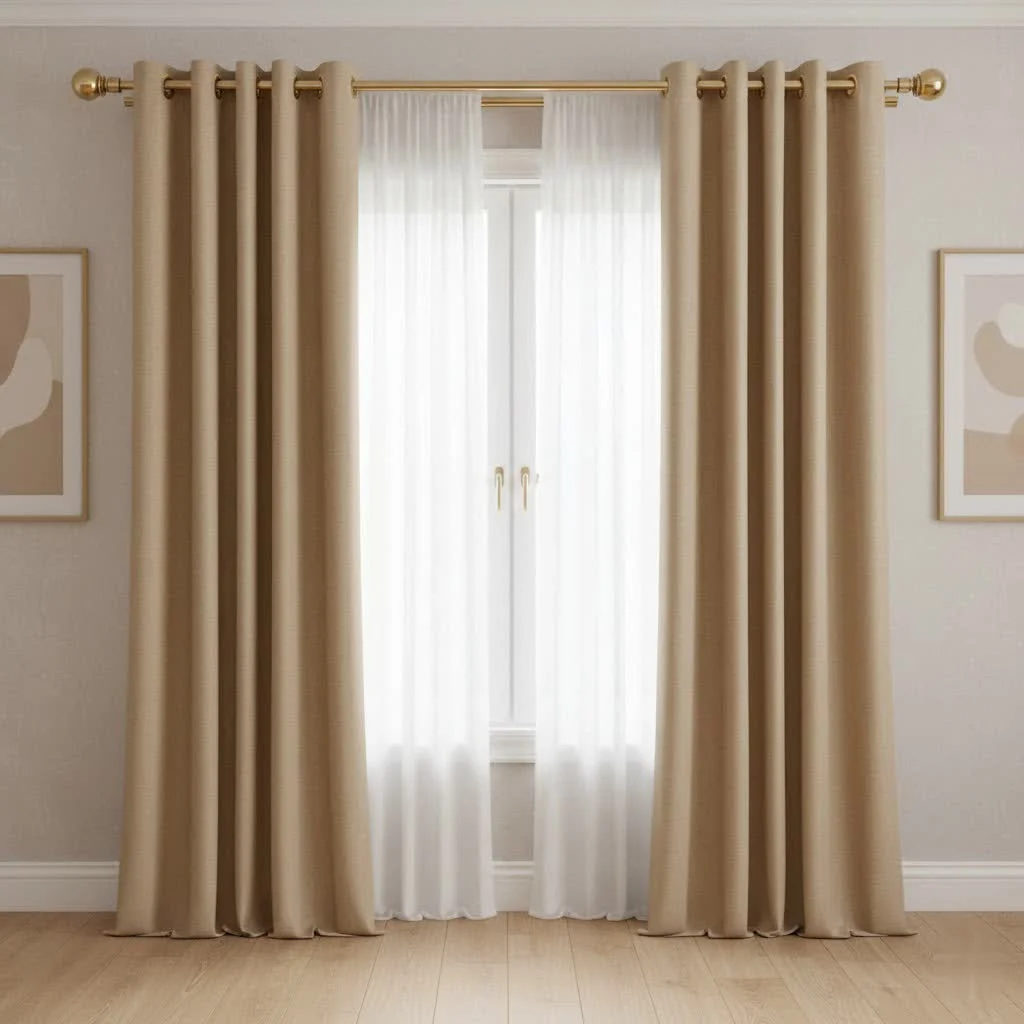
The Challenge of Corner Windows: Why Standard Rods Don’t Cut It
Traditional straight curtain rods are designed for flat walls, resulting in awkward gaps or an unfinished look when used on a corner window. This disrupts the flow of your drapery and compromises privacy and light control. Corner windows need a rod system that can gracefully navigate the angle, creating a continuous and polished appearance that integrates with your interior design. The right corner curtain rod not only solves these practical issues but also transforms these unique windows into stunning focal points. For complete curtain rods library on this site.
Types of Corner Window Curtain Rods: Finding Your Perfect Match
Addressing the unique angles of corner windows requires specific hardware. Here are the most effective types of curtain rods designed for these challenging spaces:
-
Adjustable Corner RodsAdjustable corner rods are a popular choice due to their flexibility. They typically feature hinged joints or elbow connectors, such as swivel sockets or corner ball connectors, that allow them to adapt to various corner angles, usually between 90 and 180 degrees. These connectors create the look of one continuous rod, providing a neat and seamless appearance.
- Benefits: These rods offer ease of installation and customization, as you can adjust them to fit the exact measurements of your corner window. They are ideal for creating a continuous drapery line around the corner.
- Considerations: Ensure the swivel sockets or connectors are from the same collection as your rods for a perfect fit and cohesive aesthetic. Keep in mind that curtains on these rods cannot move past the corner connectors.
-
Curved Corner RodsFor a softer, more sophisticated aesthetic, curved corner rods are an excellent option. Instead of sharp angles, these rods flow gently around the bend of your window, offering a fluid and elegant line.
- Aesthetic Appeal: Curved rods are particularly well-suited for bay windows or arched corners, lending a graceful touch that enhances the architectural features of your space.
- Functionality: While less flexible in terms of angle adjustment than hinged rods, they provide a smooth, uninterrupted path for curtains to glide, creating a truly custom look.
-
Custom-Made Corner RodsFor homeowners who prioritize precision and bespoke design, custom corner rods are the ultimate solution. These rods are made to order, allowing them to be tailored to any specific angle, length, or style.
- Precision and Luxury: Custom rods ensure a perfect fit, especially for intricate layouts or non-standard window angles. Whether you desire a minimalist design or an ornate statement, a custom option guarantees a rod that perfectly complements your unique space.
- Investment: While a higher investment, custom rods offer unparalleled accuracy and a truly high-end finish that can significantly enhance your home’s perceived value.
-
Two Separate Rods with Connectors or ButtedA more DIY-friendly or budget-conscious approach involves using two separate curtain rods and joining them at the corner.
- Connectors: You can use specialized corner connectors, or even a simple plumbing elbow for a cost-effective solution, to physically and visually connect two standard rods.
- Butting: Alternatively, two rods can be run into the corner and simply butted against each other. This method is also suitable for traverse rods, where two one-way draw rods or two two-way draw rods can meet at the corner.
- Stack-back: This method allows flexibility in how curtains stack. For example, two one-way draw traverse rods can keep the corner free of fabric, while two two-way draw rods can allow fabric to stack in the corner.
Materials and Finishes: Durability Meets Design
|
Our Picks for the Best Curtain Rod in 2026
As an Amazon Associate I earn from qualifying purchases.
|
||
| Num | Product | Action |
|---|---|---|
| 1 | Tension Curtain Rods No Drilling, Extra Long Tension Rod 41-139 Inch, Heavy Duty Shower Curtain Rod for Outdoor Patio Bathroom Windows Room Divider, Adjustable, Anti-Slip, No Rust, Black |

|
| 2 | Heavy Duty Curtain Rods for Windows 66 to 120 Inch,1 Inch Adjustable Black Curtain Rod with Easy Installation and Modern Design,Decorative Long Drapery Rods with Metal Finials (A1,Black,30-120") |
|
| 3 | YaFex Curtain Rods 32-144 Inch, Heavy Duty 1 Inch Adjustable Curtain Rod for Windows, Black Extra Long Window Treatment Rods, Modern Design, Easy Installation |
|
| 4 | Double Curtain Rod for Windows 66 to 120 Inches, 1 inch Heavy-Duty Adjustable Imitation Wood Farmhouse Double Curtain Rod, Boho Decorative and Wood Grain Finish, Dual Rod for Living Room and Bedroom |
|
| 5 | Curtain Rods for windows 32-48 inch, 5/8 inch Decorative Curtain Rod Set, Matte Black Splicing Heavy Duty Metal Curtain Rod with Brackets |
|
| 6 | Wrap Around Curtain Rod Black, Adjustable Blackout Curtain Rods for Windows 48 to 84 Inch, 1" Heavy Duty Room Darkening Drapery Rod, Easy Install and Removal |
|
| 7 | 1” Diameter Curtain Rods Itself is 30 to144 inch 1 Pack Fit 30-142 inch, 66 to 120 inch Window with Heavy Duty Adjustable Rod Matte Black Splicing Metal Extra Long Curtain Rod for Windows |
|
| 8 | 5/8” Diameter Curtain Rods 30-90 Inch, for 30-84 Inch Windows, Adjustable Splicing Black Curtain Rods for Windows with Brackets, Window Rod Long Small Curtains Rod |
|
| 9 | Heavy Duty Curtain Rods for Windows 66 to 120 Inch, 1 Inch Gold Curtain Rod Adjustable, Decorative Long Curtains Rods with Metal Finials, Easy Installation and Modern Design (A2,Gold,30"-120") |
|
| 10 | Curtain Rods for Windows 16 to 144 Inches Adjustable Length 1 Inch Diameter Window Curtain Rod with Aluminium Finials, Black |
|
The material and finish of your corner curtain rod play a crucial role in both its durability and its contribution to your room’s aesthetic.
- Common Materials:
- Metal: Popular choices include steel, wrought iron, and designer metals. These offer exceptional durability and come in various finishes like brushed nickel, bronze, or black, suitable for modern, industrial, or traditional styles.
- Wood: Wood rods provide a classic, warm, and natural look. They can be stained or painted to match existing woodwork or furniture.
- Plastic: While less common for prominent corner rods, plastic components might be found in some adjustable or flexible systems.
- Durability and Cost: Metal rods, especially wrought iron and steel, are known for their strength and longevity, making them suitable for heavier drapes. Wood offers good durability with proper care, while plastic components may be more prone to wear. Costs vary significantly, with custom metal or high-quality wood being more expensive than standard adjustable metal rods.
- Matching Your Interior: Consider the existing décor of your room. A sleek metal rod might complement a minimalist or contemporary space, while an ornate wrought iron rod could enhance a traditional or rustic setting.
Measuring for Success: Ensuring a Perfect Fit
Accurate measurements are paramount for a functional and aesthetically pleasing corner curtain rod installation.
- Measure Each Window Segment: Start by measuring the width of each window frame on both sides of the corner.
- Determine Rod Extension: For the outer edges of the windows, decide how far you want the rod to extend beyond the window frame. A common recommendation is 4 to 6 inches on each side. This allows curtains to be drawn fully off the window for maximum light.
- Measure from the Corner: For the corner sections, measure from the corner crease of the wall to the desired end point of the rod on each side, excluding the finials.
- Consider Finials: Remember to account for the length of your chosen finials, as they extend beyond the rod itself.
- Height Measurement: Measure the height from the top of the window to where you want the curtains to fall (e.g., sill length, floor length, or pooling on the floor). This guides bracket placement.
- Double-Check: Always double-check your measurements to avoid any surprises during installation.
Installation Guide: Hanging Your Corner Window Curtain Rods Like a Pro
Installing a corner curtain rod, while seemingly complex, is manageable with the right tools and a careful approach.
- Tools Needed: Safety glasses, ladder, laser level, measuring tape, pencil, drill/screw gun with extension tip, hammer, 1/8 drill bit, drywall anchors (if not drilling into studs).
- Step-by-Step Installation:
- Assemble the Rod (Preliminary): If possible, assemble the corner curtain rod loosely on the floor below the window. This helps visualize where the mounting brackets will go. Do not fully tighten set screws yet.
- Mark Mounting Points: Hold a curtain rod mount in place, ensuring it’s high enough for the curtains to cover the window top, typically a few inches higher than the window frame. Mark the screw holes with a pencil. Use a level to ensure all marks are perfectly straight. Crucially, avoid placing brackets on both sides of an interior corner where the rods meet, as they would conflict. Instead, position the bracket on one side of the angle, usually the longer wall, allowing the rod to follow the wall and then turn naturally.
- Install Brackets: Drill pilot holes at your marked points. If you are not drilling into wall studs, use appropriate drywall anchors. Securely attach the brackets to the wall with screws.
- Attach and Level the Rods: Take the rod segments apart. Place one end of a rod into its installed mount. Using a level on top of the rod, raise the rod and the mount together until the rod is level. Repeat this process for all mounts.
- Connect Rods: For adjustable rods, fit the rod into each bracket and tighten any set screws. If using a hinged or elbow connector, adjust it so the rod fits snugly around the corner. Ensure screws are inserted into both sides of the connector to prevent the rod from sliding apart.
- Hang Curtains: Thread your curtain panels or rings onto the rod. Slide the curtains onto the rods and into the brackets. For corners, draperies often cannot move past the connecting points, so select panels with this in mind.
- Finishing Touches: Install finials, securing them with set screws. Step back and make any final adjustments to ensure everything looks balanced and even.
- No-Drill Options: For renters or those wishing to avoid wall damage, some brands offer no-drill curtain rod brackets. These typically tap into the top corners of the window frame with a hammer.
Styling Your Corner Windows: Design Tips and Tricks
Once your corner curtain rods are installed, it’s time to bring your vision to life with thoughtful styling.
- Layered Look: Corner windows are perfect for creating a layered effect. Combine sheer curtains on the inner layer to softly diffuse light and provide daytime privacy, with heavier drapes on the outside for light blocking and enhanced privacy when needed. This adds depth and a luxurious feel.
- Decorative Finials: Don’t underestimate the power of decorative finials. These end pieces can inject personality and a sophisticated touch into your window treatments. Choose shapes, finishes, or themes that complement your room’s decor, whether modern or ornate. For connected rods, you’ll only need one pair of finials for the outermost ends.
- Coordinating Colors and Mixed Textures: Select drapes that harmonize with your wall color and furnishings to tie the space together. Experiment with mixed textures—velvet panels paired with linen sheers, for example—to create visual interest and highlight the window’s depth.
- Curtain Movement: Remember that curtains often cannot slide past corner connectors. Plan your curtain panels accordingly to ensure desired stack-back and functionality. If full movement around the corner is essential, consider specialized track systems that allow gliders to pass continuously.
Table: Comparing Corner Window Curtain Rod Types
| Feature / Type | Adjustable Corner Rods | Curved Corner Rods | Custom Corner Rods | Two Separate Rods (with connector) |
|---|---|---|---|---|
| Best For | Standard 90-180° corners, DIY | Bay windows, softer aesthetics | Unique angles, luxury, precise fit | Budget-friendly, specific fabric stack-back needs |
| Continuity | High (seamless look) | High (fluid curve) | Highest (perfectly tailored) | Moderate (visible joint/gap possible) |
| Flexibility | Good (adjustable joints) | Limited (fixed curve) | Highest (made to spec) | Good (can be adapted) |
| Ease of Install | Moderate | Moderate to High (if pre-bent) | Requires professional measure/install | Moderate (can be DIY with care) |
| Cost | Mid-range | Mid to High | Highest | Low to Mid-range |
Buying Guide: Where to Find Your Ideal Corner Window Curtain Rods
When purchasing corner curtain rods, several factors should influence your decision to ensure you get the best product for your home.
- Factors to Consider:
- Material and Finish: Choose materials that align with your desired aesthetic and durability needs.
- Dimensions and Angle: Accurately measure your window segments and the corner angle. Ensure the rod system you select can accommodate these specifications.
- Curtain Weight: Heavier curtains require more robust rods and brackets for adequate support.
- Functionality: Decide if you need curtains that can open and close completely around the corner or if stationary panels are sufficient.
- Style: Match the rod’s style, finials, and color to your room’s existing décor.
- Budget: Corner rods range in price depending on material, customization, and brand.
- Where to Purchase:
- Specialty Stores: Many dedicated drapery hardware retailers offer a wide selection of corner rod solutions, including adjustable, curved, and custom options.
- Home Improvement Stores: Larger stores may carry basic adjustable corner rod kits and components.
- Online Retailers: A vast array of options is available online, often with detailed product descriptions and customer reviews.
- Quality Check: Before purchasing, examine the connectors for sturdy construction and smooth operation. For adjustable rods, ensure the joints feel secure. For custom rods, verify all specifications match your measurements.
Conclusion
Transforming challenging corner windows into stylish focal points is entirely achievable with the right curtain rod. By understanding the various types—from versatile adjustable rods with swivel sockets to elegant curved designs and precise custom solutions—you can confidently select the hardware that best suits your home’s aesthetic and functional needs. Careful measurement and proper installation are key to a professional finish, allowing your curtains to beautifully frame these unique architectural features. Don’t let unconventional window layouts deter you; embrace the opportunity to enhance your space with a well-chosen corner curtain rod.
What design statement will your corner windows make with their new curtain rods?
Frequently Asked Questions
How to Install Corner Window Curtain Rods
Installing a corner curtain rod requires careful measurement and a systematic approach to ensure a professional and aesthetically pleasing result.
Begin by measuring the width of each window frame on both sides of the corner. Decide how far you want the rod to extend beyond the outer edge of the window frame, typically 4 to 6 inches, to allow curtains to be drawn fully off the window.
Hold a curtain rod mount in place, ensuring it's a few inches higher than the window frame. Mark screw holes with a pencil and use a level to ensure straightness. Drill pilot holes, use drywall anchors if not drilling into studs, and securely attach brackets to the wall. Avoid placing brackets on both sides of an interior corner where rods meet.
Place one end of a rod into its installed mount and use a level to ensure the rod is perfectly straight. Repeat for all mounts. For adjustable rods, fit segments into brackets and tighten set screws. If using hinged or elbow connectors, adjust them for a snug fit around the corner, ensuring screws are inserted into both sides of the connector.
Thread your curtain panels or rings onto the rod segments. Slide the curtains onto the rods and into the brackets. Remember that curtains often cannot slide past corner connectors, so plan panel placement accordingly. Finally, install finials, securing them with set screws, and make any final adjustments for balance.
Get our weekly buyer guide
Practical specs, not advice. Unsubscribe anytime.

This was super helpful for understanding the different types of corner rods. I ended up going with a curved rod for my bay window, and it really does enhance the privacy and light control, just like it said it would. My only minor complaint is that installation was a bit trickier than I expected, but the end result is worth it.
My home has several unique window configurations, and I’ve always found it hard to get the right window treatments. The information on how these rods transform unique windows into stunning focal points really resonated with me. I’m now planning to upgrade all my corner windows with the recommended systems.
I’ve struggled with my corner windows for ages, trying to make standard rods work, and it always looked so choppy. The guide on hinged joint rods was exactly what I needed! I finally have a continuous flow for my drapes, and it makes such a difference in how polished my living room looks. No more awkward gaps!
I appreciated the breakdown of how corner rods solve the problem of traditional rods not cutting it for angled windows. I tried one of the connector systems mentioned, and while it mostly works, the connectors themselves are a little more visible than I’d hoped. It’s functional, but not as seamless as I imagined.