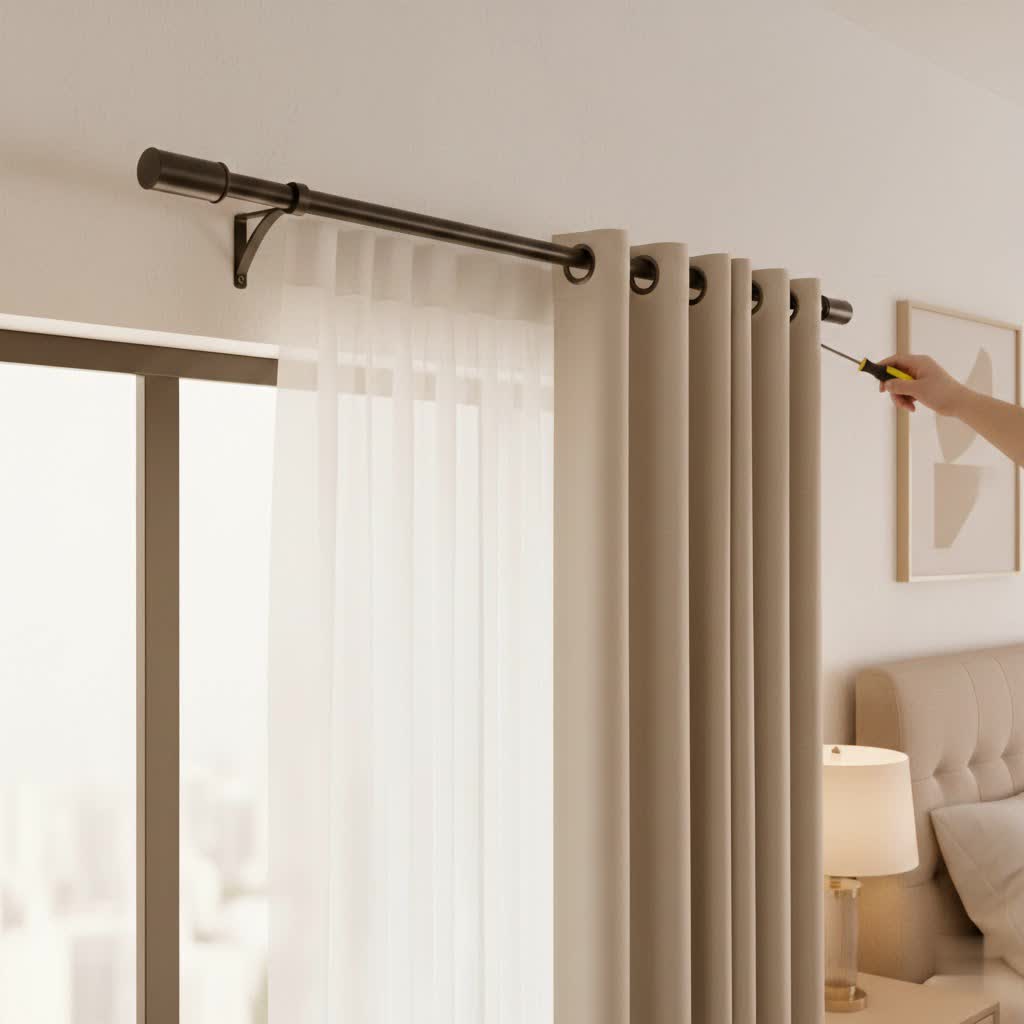
Are you tired of your curtains looking a little lackluster, or perhaps struggling with a sagging rod that just doesn’t do your beautiful drapes justice? You’re not alone. The right Curtain Rod Set isn’t merely a functional necessity; it’s a pivotal design element that can elevate your entire living space, offering both robust support and a touch of refined elegance. With over a decade of hands-on experience in window treatments, I understand the nuances of selecting the perfect hardware. This comprehensive guide will walk you through everything you need to know, from deciphering different rod types and materials to mastering measurement and installation, ensuring your windows are dressed to impress. Let’s dive into the fascinating world of curtain rod sets and discover how to find the ideal match for your home.
Common Types of Curtain Rod Sets
Curtain rod sets come in a diverse array of designs, each offering unique benefits and suiting different curtain styles and interior aesthetics. Understanding these variations is the first step to making an informed choice.
Round Rods (Standard/Decorative) are arguably the most ubiquitous choice, featuring a classic cylindrical shape. They are straightforward to install and widely available in countless finishes and decorative finial styles. These versatile rods work well with most curtain types, from grommet to rod-pocket, and can seamlessly integrate into traditional, contemporary, or eclectic interiors. However, for very heavy drapes or extra-wide windows, a single round rod might require additional center supports to prevent sagging.
Square Rods offer a more modern and minimalist aesthetic compared to their round counterparts. Their clean lines often complement contemporary and industrial design themes. While they provide robust support, their installation can sometimes be slightly more complex due to their angular design, and they may offer fewer decorative finial options.
Track Rods (Traverse Rods) are the champions of smooth curtain movement. Unlike traditional rods, traverse rods incorporate a built-in track system, allowing curtains to glide effortlessly with a cord or wand mechanism, eliminating the need for separate rings. They are ideal for heavy drapes, frequently used curtains, or large windows and sliding glass doors where ease of operation is paramount. Their sleek design often appears more functional than decorative, though many modern traverse rods offer hidden tracks or stylish finishes.
Double Curtain Rod Sets are a superb solution for layering window treatments, allowing you to hang two sets of curtains—typically a sheer panel for light diffusion and privacy, and a blackout drape for total light control—on a single window. This configuration provides versatile light management and enhanced insulation, while also creating a rich, designer-layered look. Installation requires specialized double brackets that can support the combined weight of both curtain layers.
Tension Rods are a “no-drill” marvel, perfect for renters or temporary window treatments. They rely on spring tension to hold themselves in place within a window frame, requiring no screws or brackets. While incredibly easy to install and remove, tension rods are best suited for lightweight curtains like sheers or café curtains dueens to their limited weight capacity and potential to slip if overloaded.
Return Rods (French Return Rods) are designed with a U-shaped bend at the ends, allowing curtains to wrap around to the wall. This design effectively blocks light leakage from the sides of the window, making them excellent for blackout curtains or maximizing privacy. They also create a streamlined, built-in look that minimizes gaps.
Curtain Rod Set Materials: Comparison and Evaluation
The material of your curtain rod set significantly impacts its durability, aesthetic appeal, and overall cost. Choosing the right material ensures both longevity and visual harmony with your interior.
Metal rods, such as steel, iron, brass, brushed nickel, or chrome, are among the most popular choices due to their exceptional strength and durability. Steel and iron are particularly robust, making them ideal for supporting heavy drapes without bowing or sagging. Metal rods offer a sleek, modern, or industrial look depending on their finish, with options ranging from matte black for a contemporary edge to antique brass for traditional elegance. Iron rods, in particular, can offer a softer, quieter glide with curtain rings compared to steel.
Wood rods provide a warm, classic, and often rustic aesthetic. They can be plain, carved, stained, painted, or gilded, and are frequently paired with decorative carved wood finials. While solid wood rods can be quite substantial, for lighter curtains, a wood veneer over a stronger core material like steel or iron is often recommended to prevent bowing. Wood rods are generally heftier in scale than metal options and are best suited for traditional, farmhouse, or organic-modern design schemes.
Plastic rods are the most budget-friendly option and are lightweight, making them easy to handle. However, they are typically less durable and more prone to bending or breaking under the weight of heavier curtains. Plastic rods are best reserved for very light curtains or temporary installations where aesthetics and long-term durability are not primary concerns.
Lucite rods, a newer trend, offer a chic, contemporary, and glamorous look. Often mixed with metal fittings for finials and brackets, they are a striking choice for modern and transitional interiors. However, Lucite scratches fairly easily, making it less suitable for curtains that are frequently drawn. It’s often better for stationary decorative panels.
When selecting a material, consider the weight of your curtains and the level of activity in the room. Heavy fabrics like velvet or brocade demand sturdy metal or reinforced wood rods, while sheer, lightweight materials like chiffon can be supported by thinner, simpler options. Matching the rod’s finish to other metals or materials in the room creates a cohesive and polished look.
Sizing and Installation of Curtain Rod Sets
Accurate measurement and proper installation are crucial for a functional and aesthetically pleasing curtain display. A well-hung curtain rod can make a room feel taller and windows appear larger.
How to Measure for Your Curtain Rod Set
|
Our Picks for the Best Curtain Rod in 2026
We may earn a commission when you use one of our links to make a purchase.
|
||
| Num | Product | Action |
|---|---|---|
| 1 | YaFex Curtain Rods 32-144 Inch, Heavy Duty 1 Inch Adjustable Curtain Rod for Windows, Black Extra Long Window Treatment Rods, Modern Design, Easy Installation |

|
| 2 | Wrap Around Curtain Rod Black, Adjustable Blackout Curtain Rods for Windows 48 to 84 Inch, 1" Heavy Duty Room Darkening Drapery Rod, Easy Install and Removal |
|
| 3 | Curtain Rods for Windows 16 to 144 Inches Adjustable Length 1 Inch Diameter Window Curtain Rod with Aluminium Finials, Black |
|
| 4 | Double Curtain Rod for Windows 66 to 120 Inches, 1 inch Heavy-Duty Adjustable Imitation Wood Farmhouse Double Curtain Rod, Boho Decorative and Wood Grain Finish, Dual Rod for Living Room and Bedroom |
|
| 5 | 5/8” Diameter Curtain Rods 30-90 Inch, for 30-84 Inch Windows, Adjustable Splicing Black Curtain Rods for Windows with Brackets, Window Rod Long Small Curtains Rod |
|
| 6 | Heavy Duty Curtain Rods for Windows 66 to 120 Inch, 1 Inch Gold Curtain Rod Adjustable, Decorative Long Curtains Rods with Metal Finials, Easy Installation and Modern Design (A2,Gold,30"-120") |
|
| 7 | 1” Diameter Curtain Rods Itself is 30 to144 inch 1 Pack Fit 30-142 inch, 66 to 120 inch Window with Heavy Duty Adjustable Rod Matte Black Splicing Metal Extra Long Curtain Rod for Windows |
|
| 8 | Heavy Duty Curtain Rods for Windows 66 to 120 Inch,1 Inch Adjustable Black Curtain Rod with Easy Installation and Modern Design,Decorative Long Drapery Rods with Metal Finials (A1,Black,30-120") |
|
| 9 | Tension Curtain Rods No Drilling, Extra Long Tension Rod 41-139 Inch, Heavy Duty Shower Curtain Rod for Outdoor Patio Bathroom Windows Room Divider, Adjustable, Anti-Slip, No Rust, Black |
|
| 10 | Curtain Rods for windows 32-48 inch, 5/8 inch Decorative Curtain Rod Set, Matte Black Splicing Heavy Duty Metal Curtain Rod with Brackets |
|
- Window Width: Measure the width of your window frame from side to side.
- Rod Length (Outside Mount): For outside-mounted rods (the most common and recommended method for maximizing light and making windows appear larger), add 8 to 12 inches to each side of your window frame. This allows the curtains to be fully pulled back, revealing the entire window. So, if your window is 40 inches wide, your rod should be approximately 56-64 inches long. If using telescoping rods, aim to keep them as collapsed as possible to avoid the visible “notch” and potential sagging.
- Rod Length (Inside Mount): For inside-mounted rods (hung within the window frame), simply measure the exact width of the window frame where the rod will sit.
- Rod Height: A common guideline is to install the rod about 4 inches above the window frame. However, to create the illusion of taller ceilings, you can hang the rod higher—halfway between the window and the ceiling, or even 16 inches above for very tall ceilings.
- Rod Diameter: The rod’s diameter should correspond to the weight of your curtains. A 1-inch diameter is a good all-around choice for most medium-weight curtains. For heavy drapes, opt for a thicker rod (1¼-inch or more) for maximum support. Thinner rods (¾-inch) are suitable for lighter sheers.
Simple Installation Steps at Home
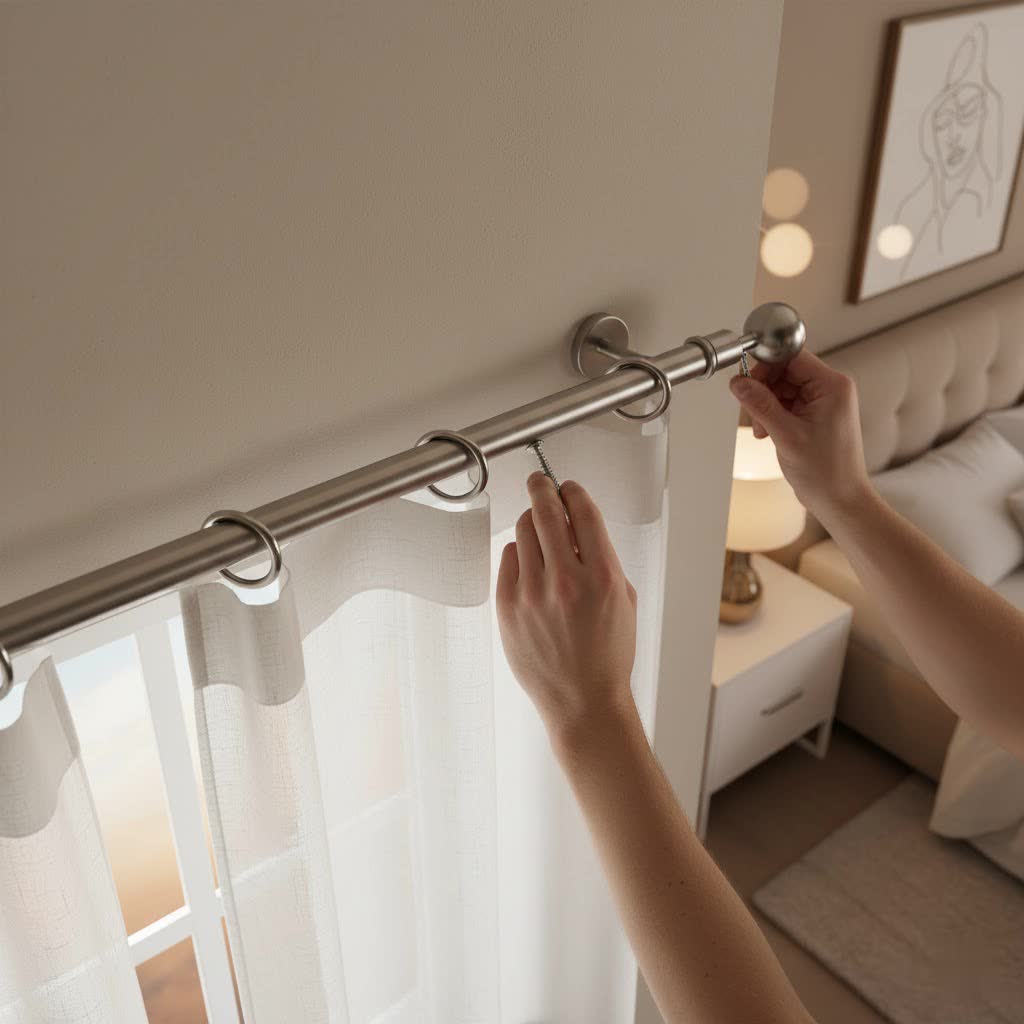
Installing a curtain rod set is a beginner-friendly DIY project that typically takes 30 minutes to an hour.
- Gather Your Tools: You’ll need a measuring tape, step ladder, level, pencil, drill, screwdriver, and potentially drywall anchors and a stud finder.
- Mark Bracket Placement: Using your measurements, mark the spots for your mounting brackets on both sides of the window. Typically, this is 3-4 inches above the window frame and 3-12 inches beyond the window casing on each side. Use a level to ensure your marks are perfectly straight.
- Add Center Support (If Needed): If your curtain rod is longer than 60 inches (or about 4-5 feet), it’s highly recommended to install a third, center bracket to prevent the rod from sagging over time, especially with heavier curtains. Mark the midpoint between your two outer bracket marks.
- Drill Pilot Holes: With your bracket locations marked, drill pilot holes into the wall for the mounting hardware. If drilling into drywall and not hitting a stud (use a stud finder to locate studs for optimal support), use appropriate drywall anchors to ensure reliable support for your brackets.
- Fasten Brackets: Securely fasten the curtain rod brackets to the wall using your drill or screwdriver. Ensure they are tightened firmly.
- Position the Curtain Rod: If using a double rod set, thread your sheer curtain onto the thinner, secondary rod first, then your main curtain onto the primary rod. For single rods, thread your curtain onto the rod. If your curtain kit includes rings, attach them to the rod, then attach the curtain to the rings.
- Hang Curtains & Check: Carefully lift the assembled curtain rod with curtains onto the installed wall brackets. Some brackets allow the rod to simply rest, while others have set screws to secure the rod in place. If present, tighten these screws to prevent shifting. Test the rod by opening and closing the curtains a few times, inspecting the brackets to ensure they are securely fastened and show no signs of loosening.
Safety Notes for Installation
Always use a sturdy step ladder to reach high areas and ensure it’s placed on a stable surface. Wear safety glasses when drilling. Be mindful of electrical wiring and plumbing inside walls before drilling by using a stud finder with wiring detection, or by exercising caution. If you are unsure about drilling into walls, consult a professional.
Comparison Table of Curtain Rod Set Types
To help you quickly compare, here’s a breakdown of common curtain rod types:
| Feature | Round Rod | Square Rod | Track Rod (Traverse) | Tension Rod | Double Rod Set |
|---|---|---|---|---|---|
| Pros | Easy to install, widely available, classic look, diverse finials | Modern aesthetic, clean lines, sturdy | Smooth curtain movement, ideal for heavy drapes, no rings needed | No-drill, temporary, rental-friendly, easy install | Layers curtains, versatile light control, enhanced privacy/insulation |
| Cons | May sag if too long or with heavy curtains without center support | Fewer finial options, may be harder to install if precision is needed | Appearance can be purely functional, may be more complex to install | Low weight limit, can slip, less decorative, not for wide openings | More hardware, can be more complex to install, heavier |
| Best For | Most curtain styles, any room décor | Contemporary, minimalist, industrial interiors | Heavy drapes, frequently opened curtains, large windows, sliding doors | Lightweight sheers, café curtains, renters, temporary solutions | Layering sheers and blackouts, bedrooms, living rooms |
Tips for Choosing a Curtain Rod Set that Matches Interior Style
A curtain rod set isn’t just a functional piece; it’s an extension of your home’s personality. Harmonizing it with your interior style is key to a cohesive and inviting space.
For a Modern and Minimalist aesthetic, opt for thin, sleek metal curtain rods with simple, low-profile finials or end caps. Finishes like matte black, brushed nickel, or polished chrome will complement clean lines and neutral color palettes. Consider track systems that blend seamlessly into the ceiling for an ultra-minimalist look.
In Classic and Traditional settings, you can embrace more ornate and decorative curtain rods. Thick, carved wood rods or intricate metalwork in finishes like antique brass, bronze, or gold will enhance a sense of grandeur and sophistication. Choose finials that echo traditional motifs for an elegant touch.
For a Rustic or Farmhouse charm, distressed wood, wrought iron, or antique white finishes are ideal. Look for wooden rods with simple, carved finials or industrial-style iron brackets. These materials pair beautifully with linen or cotton drapes in earthy tones, reinforcing a cozy, natural ambiance.
An Industrial or Urban loft space calls for bold, edgy hardware. Exposed metal curtain rods in black iron, brushed steel, or gunmetal finishes are perfect. Consider pipe-style rods and oversized metal rings to complete the raw, utilitarian yet stylish look.
When coordinating, always consider other metal accents in the room, such as light fixtures, doorknobs, and furniture hardware. While mixing metals is acceptable, ensure they are complementary (e.g., black rods with brass finials). The latest design trends often lean towards understated elegance, focusing on quality materials and finishes that blend rather than compete with the curtains and furniture.
Curtain Rod Set Buying Guide
Selecting the right curtain rod set involves careful consideration of several factors to ensure it meets your functional needs and aesthetic desires.
Factors to Consider:
- Material: As discussed, the material dictates strength and style. Heavy curtains require durable metals (steel, iron) or reinforced wood, while lighter fabrics offer more flexibility.
- Size: Precise measurements for width and height are critical. Remember to add extra width for outside mounting and consider the rod diameter for curtain weight. Adjustable rods offer flexibility, but custom-cut rods provide a seamless look without telescoping notches.
- Style: Match the rod type, finials, and finish to your interior décor. Decorative rods add flair, while traverse rods prioritize function.
- Weight Capacity: Always check the weight limits, especially for heavy drapes, and plan for center supports on longer rods to prevent sagging.
- Brackets: Ensure brackets are sturdy and deep enough to accommodate your curtains, preventing them from pressing against the wall.
Where to Buy Curtain Rod Sets:
- Specialty Curtain and Drapery Stores: Offer a wide selection, often including custom options and expert advice for unique needs.
- Home Improvement Stores (e.g., The Home Depot, Bunnings): Provide a good range of standard, adjustable, and double rod sets, along with all necessary installation hardware.
- Department Stores/Home Goods Retailers (e.g., West Elm, Target): Excellent for stylish, ready-made options in various finishes and designs to match current trends.
- Online Retailers (e.g., Amazon, Wayfair, Lumos Curtains, Highland Forge): Offer vast selections, competitive pricing, and often include customer reviews and detailed product specifications. Custom-cut rod providers like Highland Forge can offer a tailored look at a good price.
How to Check Quality:
- Feel the Weight: Heavier rods generally indicate better quality and durability.
- Inspect Finish: Look for smooth, even finishes without chips, scratches, or imperfections.
- Test Adjustability: If it’s a telescoping rod, ensure the adjustment mechanism is smooth and sturdy, without excessive wobble at the connection point.
- Examine Brackets: Sturdy, well-made brackets are essential. Check that they are robust enough for the rod and curtain weight.
- Read Reviews: Customer reviews can provide valuable insights into real-world performance, durability, and ease of installation.
Top Reputable Curtain Rod Set Brands
While personal preference and specific needs always play a role, several brands are consistently recognized for their quality, design, and reliability in the curtain rod market.
West Elm is highly regarded for its modern and mid-century inspired designs, offering sturdy adjustable rods with attractive brackets and diverse finishes. Their Oversized Adjustable Curtain Rod is often cited as a top pick for its style and support.
Umbra provides a wide range of stylish and often budget-friendly options, including versatile adjustable rods like the Cappa and Twilight Blackout rods. The Twilight rod is particularly noted for its ability to allow curtains to reach all the way to the wall, minimizing light leakage.
Threshold (Target) offers simple, timeless, and well-proportioned steel rods, such as the Dauntless collection, that are praised for feeling more expensive than their actual price tag. They provide solid construction and simple cylindrical finials.
IKEA is a popular choice for affordable and functional curtain hardware, with lines like the Racka system known for being sturdy and adaptable. Many users appreciate the ability to customize with different finials.
Highland Forge specializes in custom-cut steel rods, offering a seamless, high-quality look without the visible notch often found in telescoping rods. They allow for customization of style, diameter, and finish, making them a good option for those seeking a tailored solution.
For more traditional or heavy-duty functional hardware, Kirsch and Graber are respected brands in the drapery industry. While their decorative options can be pricier, their commitment to quality and dependability is well-established.
When comparing brands, consider the specific product lines. Some brands excel in budget-friendly options, while others are known for luxury or custom solutions. Always align your choice with your overall aesthetic, budget, and the specific functional demands of your window treatments.
Conclusion
Choosing the perfect curtain rod set is a journey that marries functionality with aesthetic appeal. By carefully considering the various types of rods, understanding different materials and their properties, accurately measuring your windows, and installing the hardware correctly, you can create a window treatment that truly enhances your living space. From the sleek efficiency of a traverse rod for heavy drapes to the classic charm of a wooden rod for light sheers, there’s a perfect solution for every home and style. Remember, a quality curtain rod set not only supports your curtains beautifully but also serves as a subtle yet significant design statement. So, take your time, explore your options, and elevate your windows with confidence! What kind of impact do you want your curtain rod set to make in your home?
Frequently Asked Questions
What is the ideal diameter for a curtain rod set?
The ideal diameter depends on the weight of your curtains and the desired aesthetic. For medium-weight curtains, a 1-inch diameter rod is a good general choice. Heavier drapes require a thicker rod (1¼ inches or more) for adequate support, while lighter sheers can use a thinner rod (¾ inch).
Can I install curtain rods without drilling holes?
Yes, tension rods offer a no-drill solution, relying on spring pressure to secure themselves within the window frame. They are ideal for lightweight curtains and renters as they don’t damage walls. Adhesive-mounted brackets are another option for very light fabrics.
How far should a curtain rod extend beyond the window frame?
For outside-mounted rods, it’s recommended to extend the rod 8 to 12 inches beyond each side of the window frame. This allows curtains to be fully drawn open, maximizing light and making the window appear larger.
What is the purpose of finials on a curtain rod set?
Finials are the decorative caps or ornaments placed on the ends of a curtain rod. While their primary function is decorative, enhancing the rod’s style, they also prevent curtains from sliding off the ends of the rod.
When should I use a double curtain rod set?
A double curtain rod set is best used when you want to layer two different types of curtains on a single window, such as a sheer curtain for daytime privacy and light filtering, combined with a blackout curtain for complete room darkening and enhanced insulation at night.